Quick Answer
Is AI in HR actually delivering results, or is it mostly hype?
Recruiting is where AI genuinely works. It’s handling job descriptions, resume screening, and candidate outreach, tasks that are repetitive and data-heavy. Adoption in recruiting has climbed to 39 percent of HR teams, and 87 percent of organizations using AI in HR report efficiency gains. But 88 percent of HR leaders say they haven’t seen significant business value from AI overall, and the gap is widest in areas like performance predictions, burnout sentiment analysis, and AI-driven career pathing. Ontario now requires employers with 25+ employees to disclose AI use in job postings, so the compliance side matters as much as the tool itself.
- AI adoption in recruiting has reached 39 percent of HR teams, with another 46 percent expected to adopt by year-end
- 87 percent of organizations using AI in HR report efficiency improvements, and 75 percent report better work quality
- 88 percent of HR leaders say their organization hasn’t seen significant business value from AI yet
- Only 8 percent of job seekers believe AI makes hiring fairer, versus 70 percent of hiring managers who trust it
- Ontario requires employers with 25 or more employees to disclose AI use in publicly advertised job postings
Behind the AI in HR Hype: A Reality Check for Employers
Artificial intelligence has been the loudest conversation in HR for the past two years. Every software vendor is promising smarter hiring, better retention, and lighter workloads through AI. Some of it is real while a lot of it is not.
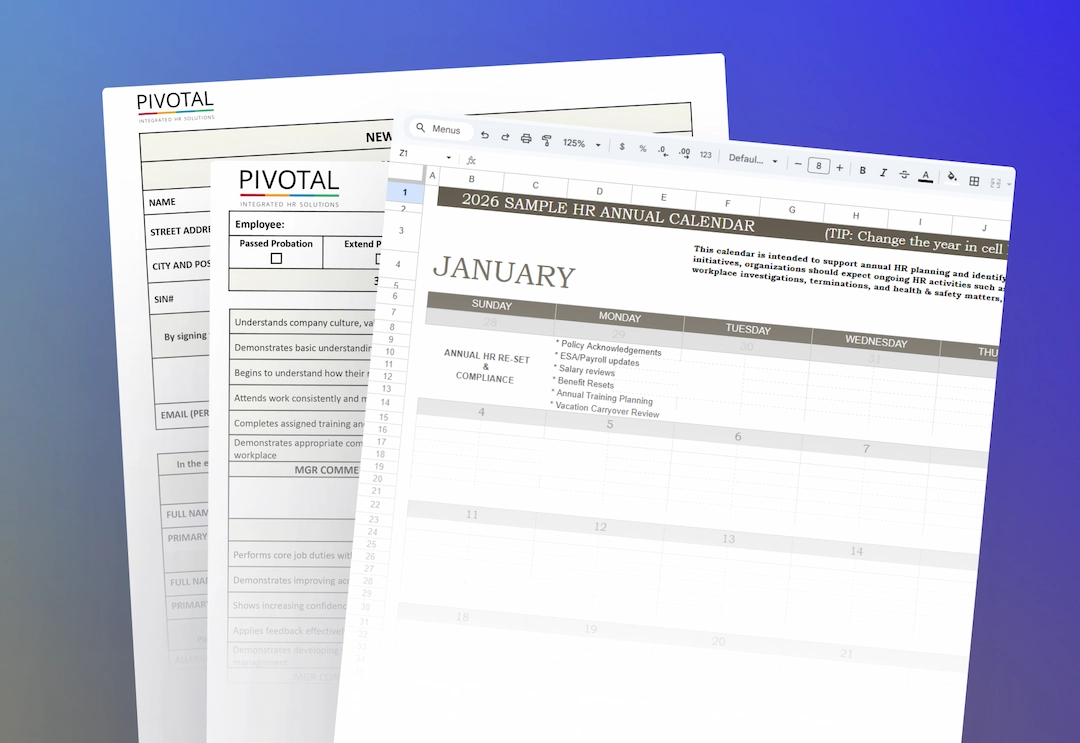
Pivotal Solutions has spent decades helping employers separate what actually works from what only sounds good in a demo. Here is where AI is genuinely delivering value in HR right now and where it is still mostly marketing.
Where AI Is Actually Working
According to SHRM’s State of AI in HR 2026 report, adoption of AI in recruiting has climbed to 39 percent of HR teams, with another 46 percent expecting to adopt by year-end. Recruiting is the number one AI use case in HR, and it is where most of the real wins are showing up.
The specific tasks where AI is delivering measurable value include writing job descriptions, screening resumes, automating candidate outreach, and communicating with applicants throughout the hiring process. These are repetitive, data-heavy tasks with clear boundaries. That combination is exactly what AI does well. Among organizations using AI in HR, 87 percent reported efficiency improvements and 75 percent reported better work quality, according to the same SHRM report.
Beyond recruiting, AI is also helping with tasks like drafting employee communications, summarizing feedback data, and building the first draft of policy documents. None of these replace human judgment, but they save real time on the busywork.
Pivotal Solutions uses AI where it makes sense in our HR services, always with human review before anything reaches a client or an employee.
Where AI Is Still Mostly Marketing
The gap between hype and outcome is real. SHRM’s data shows 88 percent of HR leaders say their organizations have not yet seen significant business value from AI. Areas where the marketing runs well ahead of results include AI-driven performance predictions, sentiment analysis promising to spot burnout, automated coaching tools claiming to replace real management, and AI-generated career pathing. Most look impressive in a demo and disappoint in practice.
Another red flag is any tool claiming to make hiring fairer through AI. According to the same SHRM report, only 8 percent of job seekers believe AI makes hiring fairer, while 70 percent of hiring managers trust it. That trust gap alone should make employers cautious.
The Compliance Angle Employers Cannot Ignore
The other reason AI hype needs a second look is compliance. Ontario now requires employers with 25 or more employees to disclose the use of AI in publicly advertised job postings, according to the Government of Ontario. Similar rules are emerging in other jurisdictions and in the U.S. at the state level.
That means using AI in hiring is no longer just an operational choice. It comes with disclosure obligations, documentation requirements, and legal exposure if the AI system produces biased outcomes. Employers who adopted AI tools without thinking about compliance are already scrambling to catch up.
Pivotal Solutions builds compliance into every AI conversation we have with clients, so the tools serve the business without creating new legal risk.
The Human Side That AI Cannot Replace
Even in the areas where AI is delivering value, it does not replace the human parts of HR that matter most. Difficult conversations, terminations, accommodations, workplace investigations, and manager coaching all still need people.
Pivotal Solutions has always believed great HR is a mix of the right systems and the right people. AI can handle the repetitive work while trusted advisors handle everything else.
The employers getting the most out of AI in HR follow a simple pattern. They start with a specific, repetitive task that eats HR time. They pilot one tool for that task and measure the results. They keep humans in the loop for every decision that affects an employee’s job, and they stay current on the compliance rules that apply to their use of AI. That approach captures the efficiency without inheriting the risk.
The AI conversation in HR is not going away. The employers who navigate it well are the ones who use technology thoughtfully and lean on trusted advisors for the parts that matter most.
Pivotal Solutions delivers HR, payroll, benefits, and compliance services that combine smart use of technology with real human expertise. If your business is trying to figure out where AI fits into your HR strategy, contact Pivotal Solutions today.
Frequently Asked Questions
Does Ontario require employers to disclose AI use in hiring?
Yes. Employers with 25 or more employees must disclose when AI plays a role in publicly advertised job postings, and this requirement now falls under Ontario’s broader pay transparency enforcement, which took full effect January 1, 2026.
Does the disclosure requirement apply to smaller employers too?
Not necessarily. Ontario’s AI disclosure rule may not apply to employers with fewer than 25 employees, though other privacy obligations can still come into play.
What about employers in other provinces, like BC or Alberta?
Ontario is currently the only province with an AI-specific disclosure law, but employers elsewhere aren’t off the hook. In BC and Alberta, private-sector employers have notice obligations under provincial privacy legislation, and while consent isn’t always required, advance notice explaining how a candidate’s information will be used generally is.
Can AI legally make a hiring decision on its own?
In most jurisdictions with AI hiring rules, no. Regulations like NYC’s Local Law 144 and Illinois’s amended Human Rights Act treat AI as a tool that influences a decision, not one that makes it independently, and they require documentation of where AI enters the process regardless of whether it’s the sole factor.
Does using AI in hiring actually reduce bias?
The data says employers and candidates disagree sharply on this. Most job seekers don’t believe AI makes hiring fairer, while most hiring managers say they trust it, and that trust gap is a big part of why regulators are stepping in with audit and disclosure requirements rather than leaving it to vendors’ claims.
What should an employer do to stay compliant when using AI in hiring?
Legal guidance in this space generally points to the same short list: know exactly what the tool does and what data it touches, give candidates notice before the tool is used, train hiring staff to answer questions about it, and keep data collection limited to what’s reasonably needed for the role.