In the 2026 labor market, “borderless hiring” has shifted from a trend to a competitive necessity. For US companies eyeing the 30% currency advantage of the Canadian workforce, or startups testing new regions, the biggest hurdle isn’t finding talent, it’s the legal red tape of employing them.
So, when exactly does a business need an Employer of Record (EOR)?
A business needs an Employer of Record (EOR) when they must hire employees in a new province or country without the 3–6 month delay and $5,000–$15,000 cost of registering a local legal entity. It is the primary solution for rapid market entry, remote compliance, and reducing international legal liability.
Key Takeaways
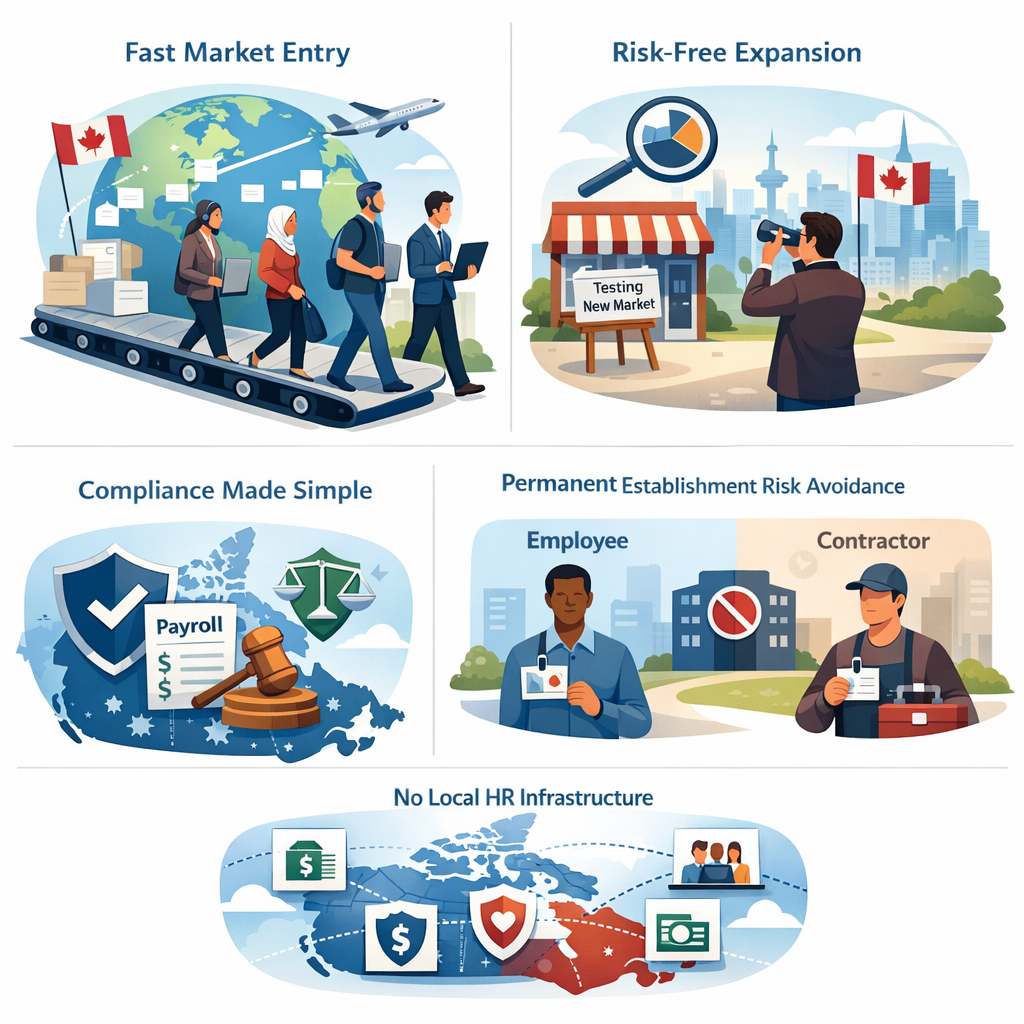
- EOR Enables Rapid Market Entry: Businesses can legally hire employees in a new province or country in as little as 48 hours, avoiding the 3–6 month delay and $5,000–$15,000 cost of setting up a local entity.
- Risk-Free Expansion: EORs allow companies to “test the waters” with 1–5 employees in a new market without long-term legal or financial commitments.
- Compliance Made Simple: EORs handle provincial-specific labor laws (e.g., ESA in Ontario, Bill 96 in Quebec), statutory deductions (CPP, EI), and benefits administration, eliminating legal and tax risks.
- Eliminates Permanent Establishment Risk: EORs officially employ remote workers, avoiding misclassification penalties and audit issues with the IRS and CRA.
- Supports Businesses Lacking Local HR Infrastructure: Ideal for companies without internal HR systems, managing payroll, benefits, and statutory compliance seamlessly.
1. When Speed to Market is Your Top Priority
Traditional entity setup in Canada or the US involves registering for a Business Number (BN) with the CRA, bank account setups, and legal incorporations that can take months.
- The EOR Advantage: With Pivotal’s EOR solutions, your Canadian team can be legally onboarded in as little as 48 hours.
- 2026 Context: In a fast-moving economy, losing 90 days to “administrative setup” often means losing your top candidate to a competitor who can issue an offer letter today.
2. When You Want to “Test the Waters” Before Committing
Expansion is a risk. If you are a US firm exploring the Greater Toronto Area or Vancouver markets, you may not want the permanent overhead of a foreign subsidiary.
- The Trigger: Use an EOR when you are hiring your first 1–5 employees in a new jurisdiction.
- The Exit Strategy: EORs allow for “lean expansion.” If the market doesn’t perform, you can offboard without the complex legal “wind-down” costs of a registered corporation. Learn more about our “Breaking Borders” strategy here.
3. When Navigating Provincial Compliance is Overwhelming
Canada isn’t a “one-size-fits-all” market. Hiring in Quebec requires compliance with Bill 96 (French language laws), while Ontario has specific mandates under the Employment Standards Act (ESA).
- The EOR Role: The EOR acts as the legal “shield,” ensuring that employment contracts, statutory benefits (CPP, EI), and workers’ compensation are handled accurately. For those with existing entities, our Professional Employer Organization (PEO) model offers a shared-risk alternative.
4. When You Need to Eliminate “Permanent Establishment” Risk
Simply paying a remote worker as a “contractor” when they function as an employee is a major audit trigger.
- The Risk: Misclassification can lead to massive back-tax penalties. The IRS (Internal Revenue Service) and the CRA have increased scrutiny on “ghost entities” and misclassified workers.
- The Solution: An EOR officially employs the worker, removing the tax “nexus” from your parent company and placing the compliance burden on the provider.
5. When You Lack a Local HR Infrastructure
Managing payroll across borders involves more than just a currency conversion. You need to manage:
- Statutory Deductions: Canada Pension Plan (CPP) and Employment Insurance (EI).
- Healthcare Levies: Provincial health taxes that vary by location.
- Local Benefits: Offering competitive dental, vision, and Life Insurance. Pivotal specializes in Outsourced HR Solutions to ensure your Canadian hires stay for the long term.
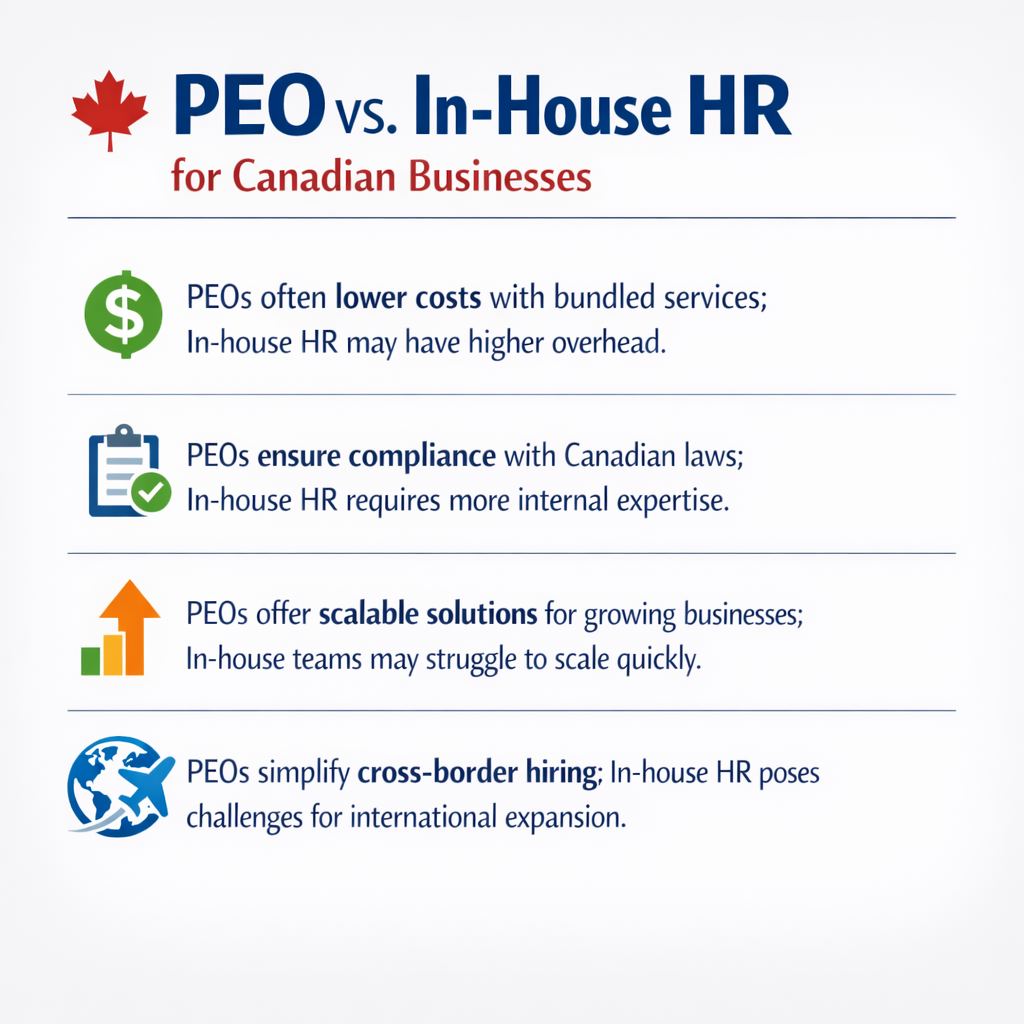
PEO vs. EOR: Which One Do You Need?
Conclusion:
Navigating the “Breaking Borders” challenge requires more than a software platform; it requires four decades of Canadian HR expertise. Whether you are a US firm hiring your first Canadian developer or a Canadian business expanding south, Pivotal HR Solutions provides the boots-on-the-ground knowledge to keep you compliant and competitive.
Get Your FREE Quote Today or Contact Us to see how we can streamline your business.
FAQs
- Is an EOR legal in Canada?
Yes. An Employer of Record is a fully legal third-party service that takes on the role of the registered employer for tax and insurance purposes. Review our detailed PEO vs. EOR guide for a deep dive. - How much does a Canadian EOR cost in 2026?
While prices vary, most EORs charge either a flat fee per employee or a percentage of the employee’s salary. This is significantly cheaper than the $15k+ required for entity legal fees and ongoing corporate maintenance. - Can a US company hire a Canadian employee without an entity?
Yes, but they cannot do it directly through US payroll. They must use an Employer of Record (EOR) to handle Canadian tax remittances, T4 slips, and provincial labor law compliance. - What is the difference between a contractor and an EOR hire?
A contractor is responsible for their own taxes and has no legal protections under the ESA. An EOR hire is a legal employee with full access to benefits, CPP, and EI, protecting the hiring company from misclassification risks.